Monofocal lenses
Provide sharp vision at one distance (usually distance vision), with reading glasses needed for close-up tasks.

Seeing clearly again
A cataract is a clouding of the eye’s natural lens, the part of the eye responsible for focusing light onto the retina. As we age, proteins in the lens begin to break down and clump together, causing vision to become blurry, hazy, or dull — as if looking through a fogged-up window.
Cataracts develop slowly and painlessly, and while they can’t be prevented, they can be completely treated with surgery.
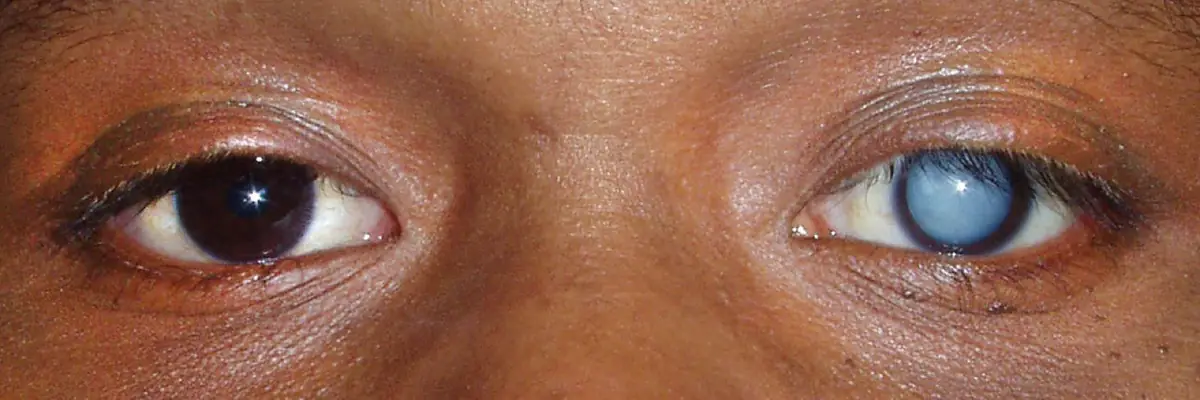
Signs to watch for
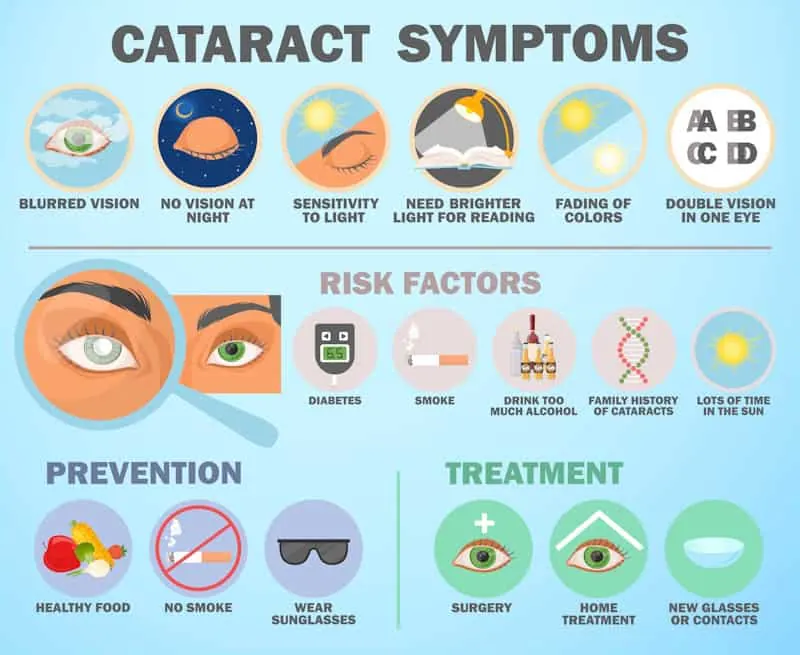
Causes
The procedure
Cataract surgery is one of the safest and most commonly performed procedures in modern medicine, with a success rate above 95%. The cloudy natural lens is gently removed and replaced with a clear, artificial intraocular lens (IOL) that restores sharp vision.
Local anaesthetic eye drops numb the eye — no needles or general anaesthesia required for most patients.
A tiny incision, usually under 3 mm, is made at the edge of the cornea.
A small ultrasonic probe breaks up the cloudy lens into tiny fragments, which are gently suctioned out.
A folded artificial lens is inserted through the same small incision and unfolds into place.
The incision is so small it usually heals without stitches.
The entire procedure takes about 15–20 minutes per eye and is performed as a day-care procedure, meaning you go home the same day.
Your new lens
Your surgeon will help you choose the right lens based on your lifestyle, visual needs, and eye health.
Provide sharp vision at one distance (usually distance vision), with reading glasses needed for close-up tasks.
Provide clear vision at multiple distances, reducing dependency on glasses.
Correct astigmatism along with cataracts.
Offer a continuous range of vision from near to far.
Your journey
A comprehensive eye exam, including measurements of your eye's shape and size to determine the correct IOL power.
You'll be awake but comfortable; most patients feel little to no pain. You'll need someone to drive you home.
Your care at Kunj Eye Hospital
Consultations are with our ophthalmologists:
Optical biometer, immersion biometer and A-scan for lens power calculation; phacoemulsification systems and a German operating microscope for surgery; Nd:YAG laser for any later haze behind the lens implant.
See all our facilities & equipment