Primary open-angle glaucoma
The most common form, developing slowly over years as the eye’s drainage angle remains open but becomes less efficient, gradually raising eye pressure.

The silent thief of sight
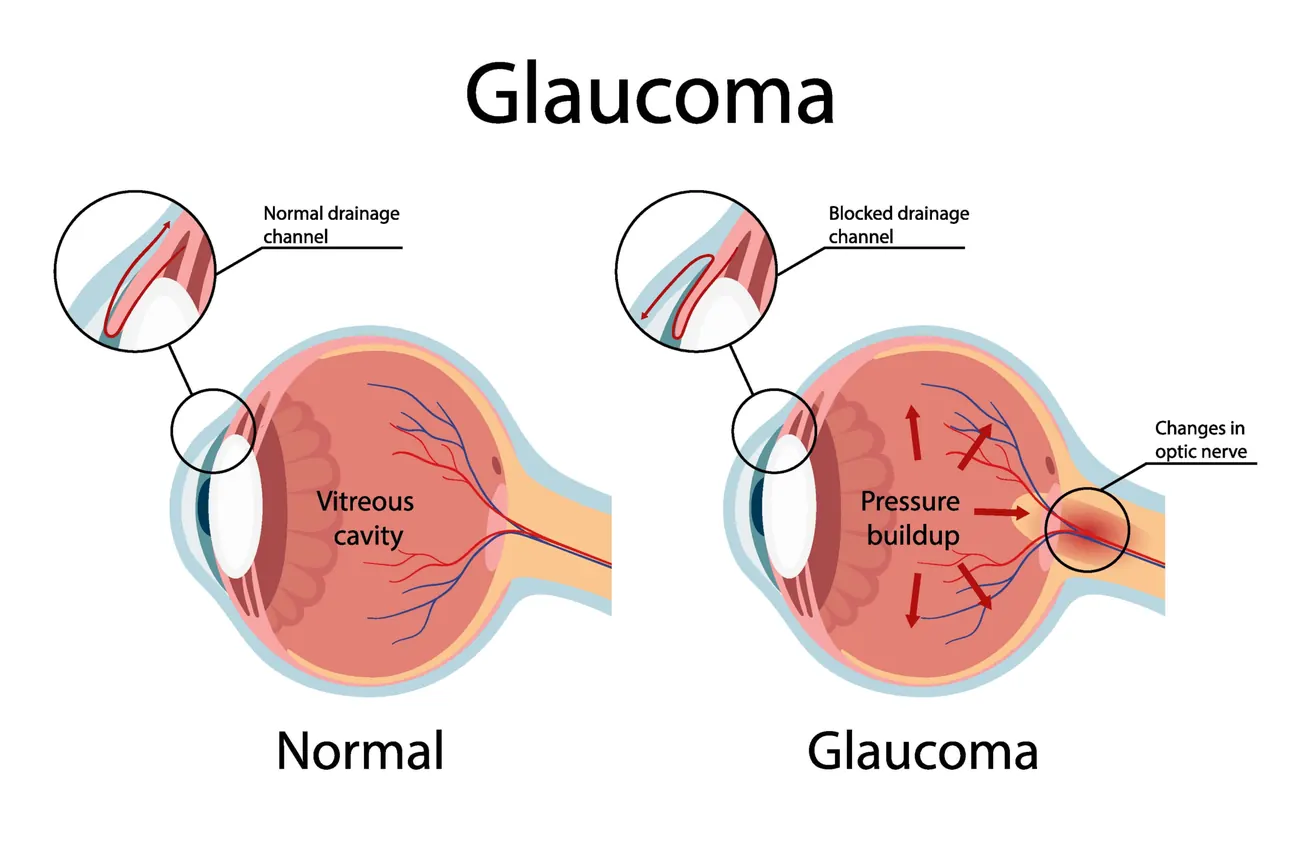
Glaucoma is a group of eye conditions that damage the optic nerve — the cable that carries visual information from the eye to the brain. It is most often, but not always, associated with elevated pressure inside the eye (intraocular pressure).
What makes glaucoma particularly dangerous is that it usually causes no symptoms until significant, irreversible vision loss has already occurred. This is why it’s often called "the silent thief of sight."
Globally, glaucoma is one of the leading causes of irreversible blindness — but with early detection and consistent treatment, vision loss can almost always be prevented or slowed.
Types
The most common form, developing slowly over years as the eye’s drainage angle remains open but becomes less efficient, gradually raising eye pressure.
Occurs when the drainage angle of the eye becomes blocked, causing a rapid rise in eye pressure. This can be chronic (gradual) or acute (sudden and painful) — acute angle-closure is a medical emergency.
Optic nerve damage occurs even though eye pressure remains within the normal range, often linked to poor blood flow to the optic nerve.
Present at birth or develops in early childhood due to abnormal development of the eye’s drainage system.
Results from another condition or factor, such as eye injury, inflammation, certain medications (like steroids), or advanced cataracts.
Who is at risk
Signs to watch for
Most types of glaucoma have no early symptoms, which is why regular screening is essential. When symptoms do appear, they may include:
A simulation of how untreated glaucoma narrows side vision over time. Real vision loss is often patchy and harder to notice.
Sudden severe eye pain, headache, nausea, vomiting, and blurred vision can mean acute angle-closure glaucoma. This requires emergency care — call +91 11 2604 2611 or go to the nearest emergency department.
Diagnosis
Treatment
Glaucoma cannot be cured, but its progression can almost always be controlled.
The first line of treatment for most patients — used daily to lower eye pressure by improving drainage or reducing fluid production.
Reserved for cases not adequately controlled with drops or laser:
Everyday life
Because glaucoma is symptom-free in its early stages, routine comprehensive eye exams — especially after age 40 or with a family history — are the only reliable way to catch it early. Vision lost to glaucoma cannot be restored, but with timely treatment, further loss can almost always be prevented.
Your care at Kunj Eye Hospital
Consultations are with our ophthalmologists:
Goldmann applanation tonometer for eye pressure, OCT scans of the optic nerve, visual field analyzer, pachymeter, and Nd:YAG laser for iridotomy.
See all our facilities & equipment